


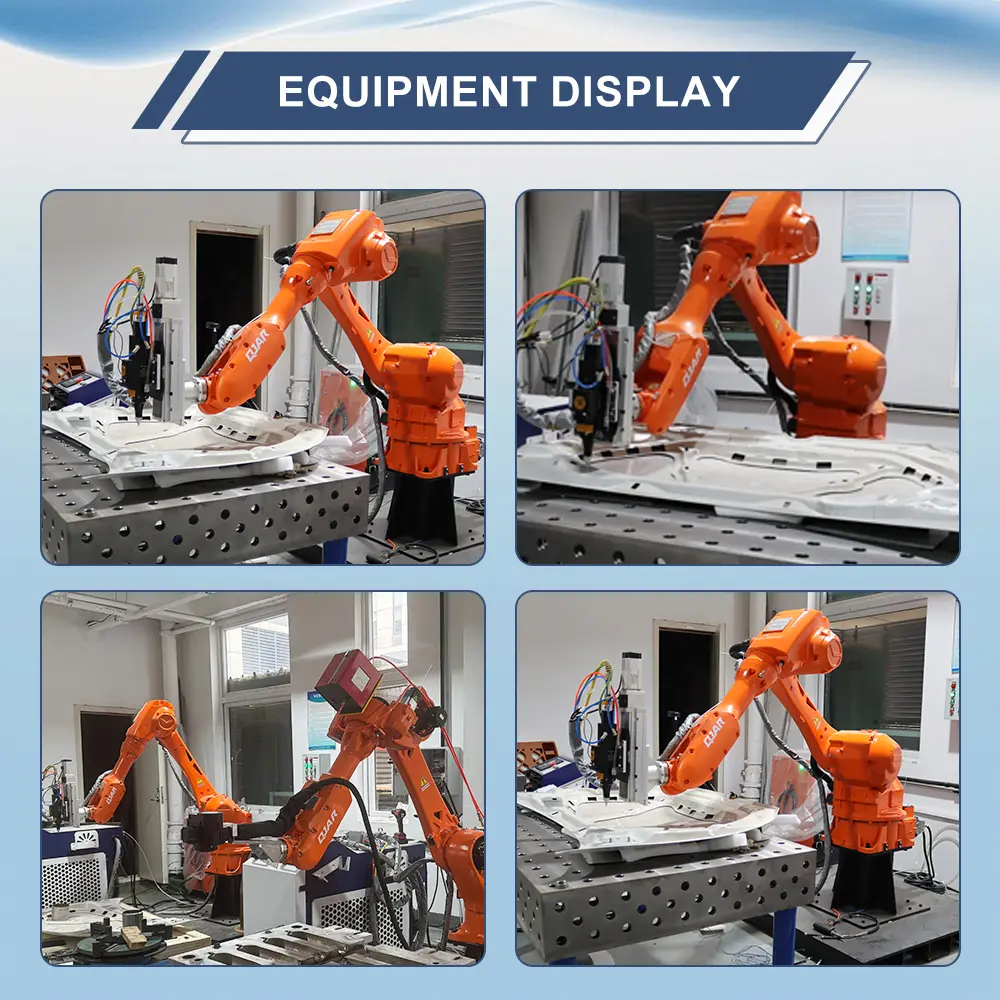

The high precision cutting machine is a strategic asset for B2B manufacturers seeking maximum automation. This 6-axis laser cutting machine integrates robotic agility with high-density fiber laser power. By automating the 3D cutting process, it eliminates the inefficiencies of manual metal trimming. The system is designed for high-load industrial environments requiring 24/7 reliability. This robotic fiber laser system ensures that complex metal parts are processed with superior edge quality. It represents a significant leap in manufacturing autonomy and cost-control.
Engineering Excellence in Robotic Fiber Laser System Technology
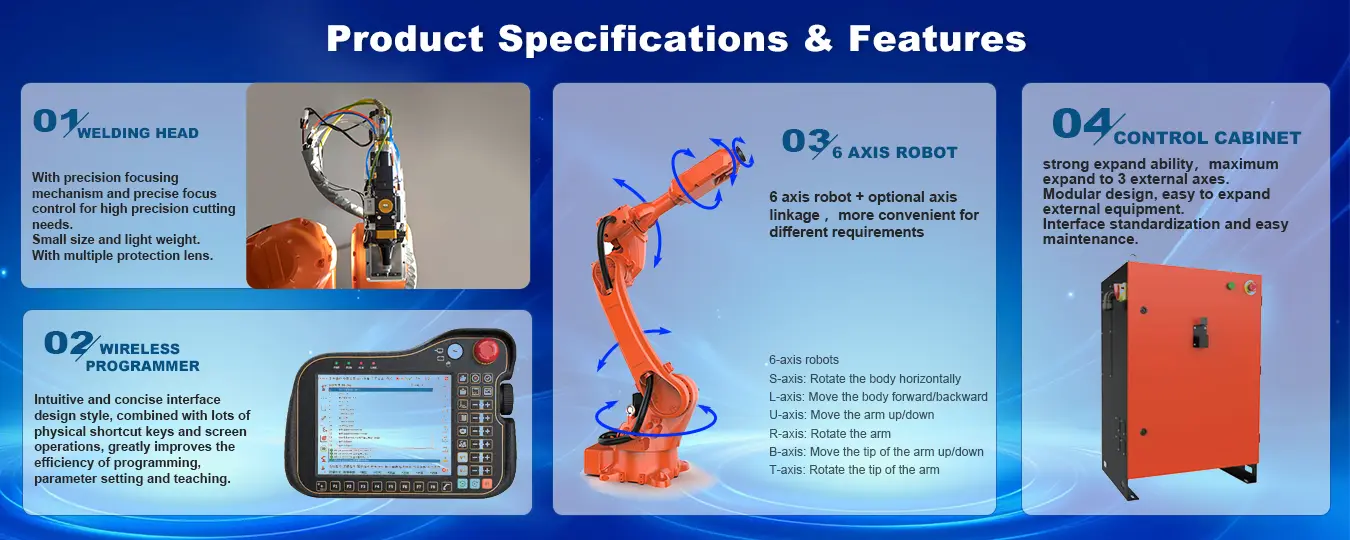
The synergy of 6-axis motion and fiber optics creates an unmatched spatial processing environment. This high precision cutting machine reaches difficult angles on pre-formed or stamped metal parts with ease.
- Automated Spatial Precision and Reach
The 2550mm reach radius allows the robot to handle large structural building materials effectively. Its 6-axis freedom ensures the laser head maintains the optimal focal distance on curved surfaces. This automation level guarantees consistency that manual processes simply cannot replicate.
- High-Efficiency Power Management
The 3000W fiber source offers a high photoelectric conversion rate, leading to lower electricity usage. Compared to traditional CO2 or plasma systems, this machine saves significant energy during peak operation. Low power demand combined with high output makes it an economically sustainable asset.
- Advanced Dynamics and Motion Control
A max moving speed of 120m/min ensures rapid transition between different cutting paths. The servo-motor configuration provides smooth, vibration-free motion even at high velocities. This dynamic performance is critical for meeting tight delivery windows in competitive markets.

| Technical Parameter | Industrial Specification |
| Laser Source | IPG / Raycus / JPT (3000W) |
| Max Reach Radius | 2550mm |
| Positioning Accuracy | ≤±0.02mm |
| Moving Speed | 120m/min |
Optimizing B2B ROI through Industrial Automation
Investing in a robotic fiber laser system provides a clear path to reducing operational overhead. The automated nature of the high precision cutting machine allows one operator to manage multiple cells.
- Dramatic Reduction in Operational Costs
Automated cutting eliminates the high labor costs associated with manual secondary processing. Precise laser trimming removes the need for expensive deburring or manual edge cleaning. This leads to a faster return on investment through reduced man-hours.
- Material Versatility and Minimal Waste
The system processes stainless steel and aluminum with a minimum line width of ≤0.1mm. Precision nesting and 6-axis accuracy ensure maximum utilization of every metal sheet or part. This reduction in scrap material contributes directly to the factory’s bottom line.
“Industrial robots can improve production efficiency by up to 40% while reducing energy consumption by 15-20%.”
— Ref: The International Federation of Robotics (IFR)
- Intelligent Focus and Reliability
The dynamic following system adjusts the focus height in real-time based on surface deviations. This prevents head crashes and ensures consistent cut quality across the entire 3D track. Water cooling maintains the internal components at peak performance levels during 24/7 industrial use.
| Integration Factor | Impact on Efficiency |
| Robot Capacity | 40KG (Supports heavy optics) |
| Location Precision | ≤±0.5mm (System-wide) |
| Automation Level | Fully Autonomous Processing |
Benchmarking 6-Axis Laser Cutting Machine Performance
Thehigh precision cutting machine outperforms traditional mechanical systems in both speed and versatility. Modern 6-axis laser cutting machine technology provides a 90% higher efficiency rating in spatial metal processing. This makes therobotic fiber laser system a mandatory asset for competitive B2B manufacturing environments.
“Automated laser systems achieve a 50% to 80% reduction in cycle times for complex 3D assemblies.”
— Ref: Laser Institute of America (LIA)
Strategic Conclusion: Elevating Output with the High Precision Cutting Machine
The 3000W 6-axis platform is the definitive choice for facilities focused on high-accuracy spatial cutting. By utilizing a robotic fiber laser system, businesses achieve elite precision with significantly lower labor overhead. This 6-axis laser cutting machine is designed for the rigors of modern manufacturing. It provides a high-speed, energy-efficient solution for complex metals and 3D industrial tracks. Investing in thishigh precision cutting machine ensures your production line meets the highest international quality standards.


Applications of Robot Cutting Machine
Advertising, Signs, Signage: This is an efficient, precise, and versatile solution for billboard and signage production, capable of processing a variety of materials (acrylic, metal, plastic, foam board, etc.) and achieving precise cutting of complex shapes.
Auto Parts: By utilizing the flexible robotic arm equipped with a laser cutting head, high-precision and high-speed drilling, trimming, deburring, and contour cutting can be performed on complex three-dimensional plastic or metal parts of the car body (such as antenna holes and roof beam holes), instrument panels, and bumpers, achieving automated production and improving quality and efficiency.
Electronic Parts: It primarily utilizes high-precision laser or plasma technology for precise 3D contour cutting, grooving, drilling, and fine trimming of printed circuit boards (PCBs), metal casings, connectors, heat sinks, etc., achieving automated, high-efficiency, and highly consistent processing of complex geometric shapes and fine structures.
Sheet Metal Processing: By combining high-precision, highly flexible industrial robots with laser cutting heads, efficient and precise cutting of three-dimensional, complex-shaped parts from various thin metal sheets (such as stainless steel and carbon steel) can be achieved, significantly improving processing speed and accuracy.
Metal Crafts: By using methods such as lasers and plasma, high-precision and high-efficiency cutting of complex shapes can be achieved, capable of processing various metal materials (such as stainless steel and aluminum), significantly improving the precision, complexity, and production efficiency of handicrafts.
FAQ
- What are the advantages of robotic cutting compared to traditional methods?
High Flexibility: Capable of cutting complex shapes and performing multi-axis bevel cutting, adapting to the needs of different parts.
High Precision/Consistency: Ensures stable and high-precision cutting quality for mass-produced parts.
High Efficiency/Automation: Operates 24/7, reducing manual intervention and increasing productivity.
Safety: Enclosed safety protection protects operators.
- What cutting methods can be used with robotic cutting systems?
This mainly includes laser cutting (using a focused laser to melt the material) and plasma cutting (using a high-temperature plasma jet).
- What materials can a robotic cutting system cut?
It can cut metals such as carbon steel, stainless steel, aluminum, and copper, as well as some non-metallic materials, depending on the cutting head and power source used.
- What is bevel cutting? How do robots perform it?
Bevel cutting involves cutting edges at an angle. Robots, through their multi-axis movement (such as 5-axis or 6-axis) and specialized cutting heads, can flexibly control the cutting angle and trajectory, enabling precise multi-angle bevel cutting.
- Common problems and solutions for robotic cutting?
Problem: Non-perpendicular cuts, incorrect dimensions, and blurry cut edges.
Solution: Optimize the robot program (path/speed/angle), adjust the focus tracking system, check laser/plasma parameters, and ensure the material is flat.


Reviews
There are no reviews yet.